
As a startup in the business world, renting office space may seem simple, but there are many pitfalls you can fall into. From budget mistakes to wrong location choices and contractual missteps: these errors can cost your company dearly and significantly slow down your growth.
The most common mistakes are: underestimating total costs, misjudging your space requirements, ignoring flexibility in contracts, and choosing a location without considering accessibility for customers and employees. By recognizing and avoiding these mistakes, you not only save money but also lay a solid foundation for your company’s growth.
What budget mistakes do startups often make when renting office space?
The biggest budget mistake startups make is looking only at the price per square meter and overlooking all additional costs. Service charges, parking spaces, internet, cleaning, and meeting rooms can quickly double your monthly expenses.
Many entrepreneurs also forget to account for one-time costs, such as the deposit (usually 2 to 3 months’ rent), furnishing, and connection costs for internet and telephony. With traditional rental, you quickly end up with $5,000 to $10,000 in startup costs before you can even begin.
Another common mistake is having too tight a budget for growth. You might think 30 square meters is enough, but if you hire an employee within a year, you’re already stuck with an office that’s too small. It’s wise to calculate at least 20% extra space for future growth.
Why is location choice so crucial and where does it often go wrong?
Location determines whether customers can easily find you, whether employees are willing to work for you, and whether your business comes across as professional. Many startups choose purely based on price and later realize that a poor location damages their business.
The most common location mistakes are: choosing a place that’s poorly accessible by public transport, having insufficient parking options, or being located in a neighborhood that doesn’t fit your company image. An IT consultant who receives clients at a run-down industrial site makes a different impression than someone with an office at a modern business park.
The proximity of amenities is also often underestimated. Can you have lunch nearby? Is there a gas station or bank? These practical matters affect your daily work satisfaction more than you think. For workplaces in Amstelveen, for example, the combination of good accessibility and professional appearance immediately gives your business more credibility.
How do you prevent contract mistakes with your first office rental?
Contract mistakes usually arise because startups don’t read the fine print carefully and are tempted by low monthly prices without looking at the contract terms. Notice periods of 6 to 12 months, automatic renewals, and high penalties for early termination are common pitfalls.
Pay particular attention to the following contractual points: the exact notice period, indexation of rent, what is and isn’t included in the monthly price, and who is responsible for maintenance and repairs. Many startups enthusiastically sign a contract and later discover they’re stuck with unfavorable terms.
Another common mistake is not negotiating flexibility. As a startup, you don’t know exactly how fast you’ll grow. Make sure you can expand within the same building, or that you can downgrade if things go wrong. Also check out different office options to see which best fits your situation.
Which facilities are really necessary and which are superfluous?
As a startup, you mainly need the basics: reliable internet, a clean workspace, access to a meeting room, and parking. Luxury facilities like a private coffee corner, reception, or fitness room are nice but not necessarily essential for your business operations.
Essential facilities:
- Fiber optic internet (minimum 100 Mbps up/down)
- Climate control and good lighting
- Access to a meeting room (minimum once per week)
- Secure access (24/7 or during office hours)
- Parking for yourself and visitors
Nice-to-have facilities:
- Reception service
- Coffee service or pantry
- Cleaning service
- Mail handling
- Lounge or networking spaces
The art is determining what your business really needs. A web designer who mainly works alone has different needs than an accountant who regularly receives clients. Don’t pay for facilities you don’t use.
What are the pitfalls of different office concepts?
Each office type has its own pitfalls. With traditional office rental, you’re stuck with long contracts and high startup costs. In coworking spaces, you have little privacy and control over your work environment. Flexible offices seem ideal but can be expensive if you’re not careful.
Traditional office rental pitfalls:
- High startup costs (deposit, furnishing, connections)
- Long contract periods (usually 3 to 5 years)
- Arranging all facilities yourself
- Risk in case of landlord bankruptcy
Coworking pitfalls:
- No privacy for confidential conversations
- Noise and distraction from other users
- No fixed workspace or storage
- Limited control over your work environment
Serviced office pitfalls:
- Higher monthly costs than traditional rental
- Dependence on the service provider
- Less customization possible
- Shorter contracts can lead to uncertainty
How do you avoid problems with growth and flexibility?
Growth problems arise when you get stuck in an office that’s too small or pay too much for space you don’t use. Therefore, plan from day one for different growth scenarios and choose an office solution that can grow with you.
The best approach is to start with a flexible concept where you can scale up and down without breaking contracts. Think of a step-up model: from a workspace to a small office and later to a larger office within the same building. This prevents expensive moves and helps keep costs under control.
Also consider the possibility of booking additional services as your business grows. Will you need a receptionist later? More meeting rooms? Mail handling? Choose a partner who can provide these services, so you don’t have to search again when your needs change.
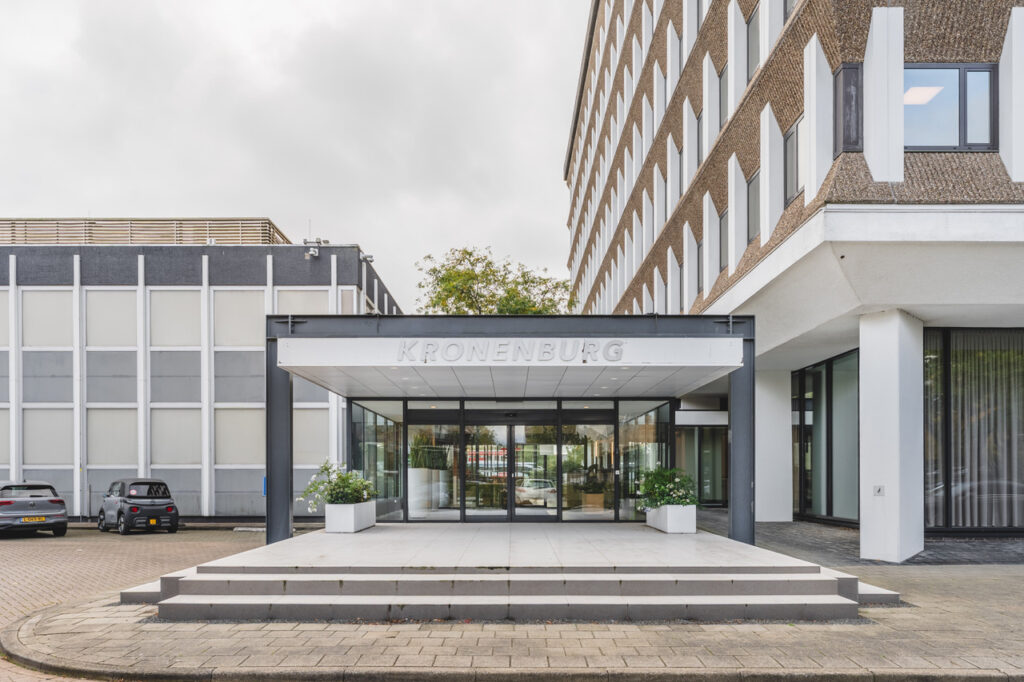
How Kronenburg Offices helps with smart office space choices
At Kronenburg Offices, we understand the challenges of starting entrepreneurs. That’s why we offer a step-up model that lets you grow without hassle:
- Turnkey offices from 25-85 m² – everything included, no surprises
- Flexible contracts – minimum 12 months, then 3 months notice period
- All-inclusive formula – fiber optic, cleaning, meeting rooms, reception, and 24/7 access
- Personal guidance – one point of contact from viewing to daily management
- Growth opportunities – expand within the same building without contract breach
We have more than 15 years of experience in serviced offices and know exactly what mistakes entrepreneurs make. Our team helps you make the right choice for your situation, so you can focus on what’s really important: doing business. Want to know how we can simplify your office search? Contact us for a no-obligation conversation.
Related Articles
- How Much Does an Office Space With Reception in Amstelveen Cost?
- How do you choose the right location when renting office space?
- What are the tax benefits of renting office space as an entrepreneur?
- What does an all-inclusive office space with meeting room cost in Amstelveen?
- What are the hidden costs when renting office space?