
When you’re looking for office space, you’ll encounter various contract types, each with their own advantages and disadvantages. The main choice lies between traditional lease agreements and serviced office contracts. You also need to consider contract duration, flexibility, and which costs are exactly included. The right contract depends on your business situation, growth plans, and the level of certainty you’re seeking. In this article, we explain all contract types so you can make an informed choice.
What is the difference between traditional lease and serviced office contracts?
Traditional lease agreements are contracts for bare rental: you only rent the space and arrange all facilities yourself. Serviced office contracts offer a complete workplace, including internet, furniture, cleaning, and often reception and meeting facilities as well.
With traditional lease, you’re responsible for furnishing the space, connecting internet, and arranging cleaning and maintenance. You usually sign for a minimum of 3 to 5 years and often pay a security deposit of 3 to 6 months’ rent. The advantages are more control over your space and often lower monthly costs in the long term.
Serviced offices work differently. You get a ready-to-use workplace where everything is already arranged: from fiber optic internet to coffee in the pantry. The contracts are more flexible, often starting from 12 months, and you can scale up faster as your business grows. The downside is that monthly costs are higher, but you get a lot of convenience in return.
What contract duration can you choose when renting office space?
Contract durations vary from monthly, flexible agreements to multi-year, traditional lease contracts of 5 to 10 years. Most serviced offices have a minimum term of 12 months, with notice periods of 1 to 3 months.
For traditional office rental, there’s usually a minimum of 3 to 5 years. Some landlords even require 10 years, especially for new construction properties. This provides security for both parties, but little flexibility if your business grows or shrinks rapidly.
Serviced offices offer more flexibility when renting workplaces. You can often choose from contracts of 12, 24, or 36 months. Some providers even have monthly contracts, but these are more expensive and less suitable for businesses seeking stability.
The notice period also differs. With traditional lease, it’s often 6 to 12 months; with serviced offices usually 1 to 3 months. This makes it easier to respond to changes in your business.
What does an all-inclusive office lease contract mean exactly?
An all-inclusive office lease contract means that all costs for your workplace are included in one monthly price. This usually includes rent, service costs, internet, cleaning, coffee, use of meeting rooms, and often reception and security as well.
An all-inclusive rate typically includes the following:
- Basic space with furniture (desk, chairs, cabinets)
- Ultra-fast fiber optic internet connection
- Daily cleaning of your office and common areas
- Use of meeting rooms (often with a certain number of hours per month)
- Coffee, tea, and basic beverages
- Reception services and mail handling
- 24/7 access and security
- Climate control and lighting
The advantage of all-inclusive contracts is that you know exactly what you pay monthly: no surprises from additional service costs or sudden increases in internet subscriptions. For many entrepreneurs, this predictability is valuable for budget planning.
Do note what’s not included. Phone subscriptions, specific furniture, extra meeting hours, or catering for events are usually charged separately. Always ask for a complete overview of what is and isn’t included.
How flexible are modern office lease contracts?
Modern office lease contracts offer much more flexibility than before, especially with serviced offices. You can often scale up or down within the same location without breaking the contract.
Flexibility manifests in various ways. First, you can often adjust your space to your growing team. Start with 25 square meters and switch to 50 or 85 square meters when you hire more people. Many providers make this possible without penalties or new contract negotiations.
You also see more flexibility in terms of services. You can purchase additional meeting hours when you need them, temporarily reserve an extra workplace for freelancers, or make seasonal adjustments. Think of extra storage during busy periods or expanding your internet bandwidth.
Notice periods have become shorter. Where you used to be stuck with multi-year contracts, you can now often exit your contract with a notice period of 1 to 3 months. This provides peace of mind as an entrepreneur, because you’re not stuck for years with a space that no longer fits your business.
What legal aspects should you check in an office lease contract?
With office lease contracts, you should especially pay attention to notice periods, liability, rent indexation, and what happens in case of default or bankruptcy. The division of maintenance costs and who is responsible for damage is also important.
Notice periods and renewal are crucial. Check whether the contract is automatically renewed and with what notice you can terminate. Some contracts automatically renew for the same period as the original contract, which can be inconvenient if you want to maintain flexibility.
Rent indexation determines how your monthly costs increase. Many contracts link this to inflation or national statistics. Make sure there’s a maximum percentage included, so your rent can’t increase unlimited during times of high inflation.
Liability and insurance are also important. Who is responsible if damage occurs to the property? Do you need to take out your own business liability insurance? And what happens in case of damage from fire or burglary?
Maintenance and repairs must be clearly divided. With serviced offices, the landlord usually arranges everything, but with traditional lease, you might be responsible for certain maintenance. Read this carefully to avoid surprises.
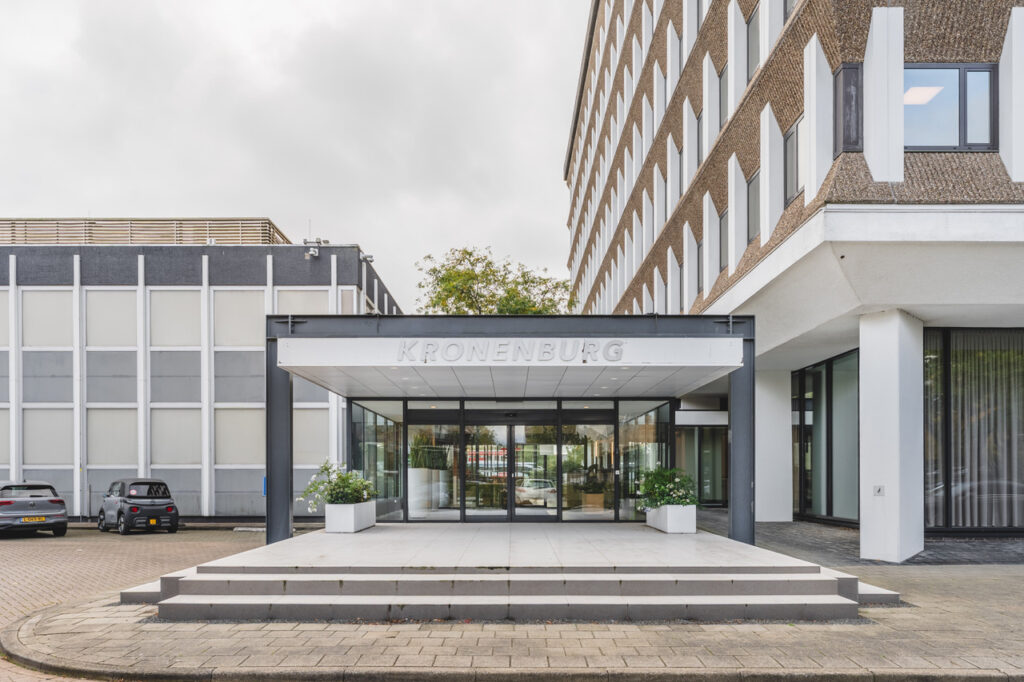
How Kronenburg Offices helps with contract choices
With us, you get transparent, flexible contracts without hidden costs or legal pitfalls. We offer all-inclusive office rental from 12 months with only 3 months’ notice, so you can grow without contractual stress.
Our contract advantages:
- All-inclusive prices from €1,250 per month for 25 m², including everything
- Flexible growth within the same location, without contract breach
- Short notice period of only 3 months after the first 12 months
- No hidden costs – what you see is what you pay
- Personal contact person for all contract questions and adjustments
We believe in fair, understandable contracts, from entrepreneur to entrepreneur. No legal jargon or surprises: just clear agreements that make both parties happy. Want to know more about our approach and experience? Or do you have questions about which contract fits your situation best? Contact us for a personal conversation, without obligations.
Related Articles
- Office space outside Amsterdam with all the benefits of the Randstad
- Office space near the A9: excellent accessibility for employees and visitors
- What are the tax benefits of renting office space as an entrepreneur?
- What are the benefits of renting office space with reception?
- How important is a representative office for your business?