
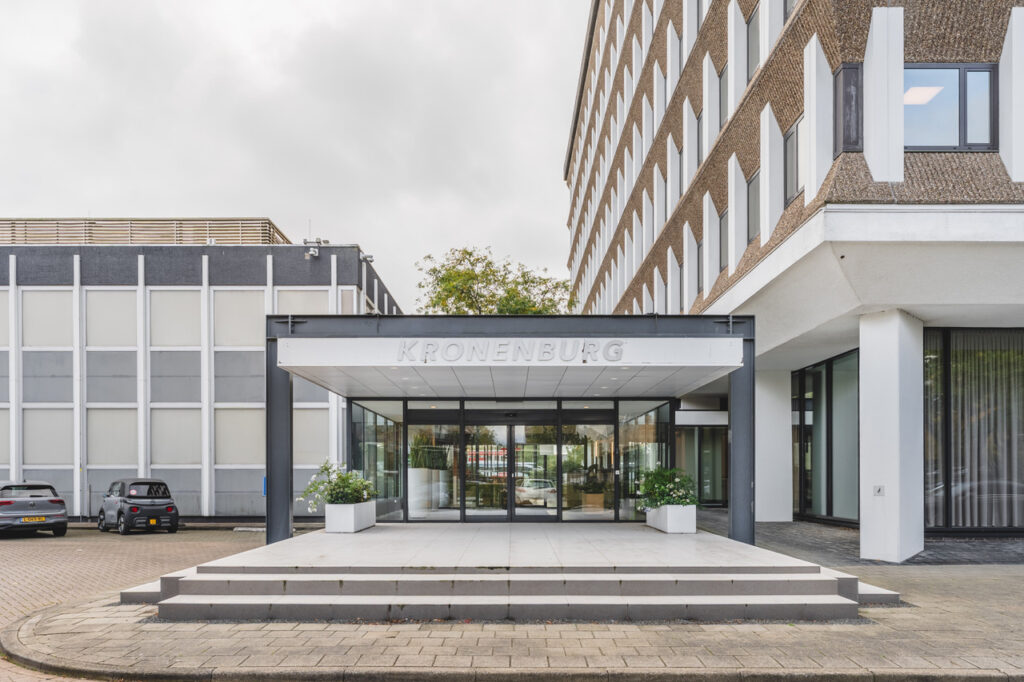
The difference between a serviced office and renting office space yourself lies in the level of service and flexibility. With a serviced office, you get an all-inclusive package with furniture, internet, reception, and cleaning, while with traditional office rental, you arrange everything yourself. A serviced office offers more flexibility and faster startup possibilities, but traditional rental gives you more control and can be cheaper in the long term.
What exactly is a serviced office?
A serviced office is a fully furnished office space that you can move into immediately without having to arrange facilities yourself. You get a turn-key workplace, including furniture, high-speed internet, reception services, cleaning, and access to meeting rooms. It differs from traditional office rental because all services are included in one monthly price.
The all-inclusive formula means you don’t need to sign separate contracts for internet, cleaning, or security. You pay one fixed amount per month and can immediately focus on your business. Most serviced offices also offer flexible contract terms, often with shorter notice periods than traditional office rental.
Typical amenities in a serviced office include sound insulation, climate control, 24/7 access, shared lounges, and often facilities like a company restaurant. For growing businesses, this is ideal because you can rent office space without the administrative hassle of arranging all facilities yourself.
What are the advantages of renting an office building yourself?
Traditional office rental gives you complete control over your workspace and often lower costs per square meter with long-term rental. You can furnish the building entirely to your own preferences, carry out renovations, and choose your own suppliers for services like internet and cleaning. This offers more freedom to tailor your office exactly to your business needs.
Long-term stability is a major advantage of your own rental. You don’t need to worry about price increases or service changes that you cannot influence. With your own rental contract, you can often also allow subcontractors or sublet parts of the building, which can generate additional income.
For established businesses with stable growth plans and sufficient budget for startup costs, traditional rental can be more financially attractive. You also build a direct relationship with the property owner, which can help with future expansions or modifications.
What costs are involved with both options?
With a serviced office, you pay one all-inclusive monthly amount that covers all costs, while with traditional rental you receive multiple separate bills. Serviced offices often cost €40–80 per square meter per month, depending on location and amenities. With traditional rental, you pay gas, water, electricity, internet, insurance, maintenance, and possibly service costs in addition to the rent.
| Cost Item | Serviced Office | Traditional Rental |
|---|---|---|
| Monthly Rent | All-inclusive rate | Base rental price + service costs |
| Startup Costs | Deposit + first month | Deposit + furniture + renovation |
| Utilities | Included | Separate bills |
| Internet & IT | Included | Own contract + installation |
| Maintenance | Included | Own responsibility |
Hidden costs with traditional rental are often underestimated. Think about one-time installation costs for internet, security systems, and telephony. Maintenance, repairs, and equipment replacement are also at your own expense. With a serviced office, these costs are predictable and included in your monthly price.
Check the available office spaces to get a realistic picture of current market rates in your region.
Which option fits best for which type of business?
Startups and growing businesses usually benefit most from serviced offices due to the flexibility and low startup costs. Established businesses with stable growth plans and more than 15 employees often find more value in traditional office rental due to lower costs per square meter and greater degree of control.
For businesses that want to scale quickly or are still uncertain about their space requirements, a serviced office is ideal. You can grow within the same location without contract breach or moving costs. This is especially valuable for consulting firms, IT companies, and other knowledge-intensive organizations that regularly change in size.
Traditional rental fits better with businesses that have specific requirements for their workspace, such as production or storage space, or that want to use their office as a marketing tool with unique furnishing. Also, businesses that are certain they want to stay in the same location for the next 5 to 10 years can better choose traditional rental.
Budget also plays an important role. If your startup capital is limited, a serviced office offers a lower entry threshold. If you have sufficient buffer for startup costs and are willing to manage facilities yourself, traditional rental can work out cheaper in the long run.
How Kronenburg Offices helps with choosing between serviced office and own rental
We offer the best of both worlds: the advantages of a serviced office, with more control and personal service than large chains. You get your own, lockable office with all-inclusive amenities, but also the flexibility to grow and personal contact with the owner himself.
Our approach combines the advantages of both options:
- Turn-key office units from 25 to 85 m² that are immediately ready to move in
- All-inclusive service including fiber optic internet, cleaning, and 24/7 access
- Personal point of contact – no tickets or waiting lists, but direct communication
- Flexible growth within the same location, without contract breach
- Own office with door – no open coworking, but real privacy
- Transparent prices without hidden costs or unnecessary services
We understand that every entrepreneur has different needs. That’s why we also offer a step-up model: from virtual office to workplace to own office space. This way you can grow at your own pace, without forced relocations.
Want to know which option fits best with your situation? Read more about our approach or schedule a viewing directly to discuss the possibilities.
Related Articles
- Office space in Amstelveen for businesses with clients in the Randstad
- From hot desk to private office: growing within one business center
- Renting office space in Amstelveen: professional, flexible, and easily accessible
- Which office spaces in Amstelveen are available immediately?
- What are the differences between office space in Amstelveen and in Amsterdam?