
You can flexibly scale up your office space in several ways: by renting additional units within the same location, moving to a larger space, adding flexible workstations, or making better use of shared facilities. The best approach depends on your growth pace, budget, and contract flexibility. Good planning and the right lease agreement make the difference between smooth growth and costly relocations.
What are the different ways to expand your office space?
You have four main options to expand your office space: renting additional units, moving to a larger space, adding flexible workstations, or optimizing shared facilities. Each option has advantages and disadvantages that depend on your situation and growth expectations.
Renting additional units within the same building is often the most cost-effective option. You keep your familiar location, don’t have to pay moving costs, and can grow gradually. The downside is that you might get non-adjacent spaces, which can complicate team communication.
Moving to a new kantoorruimte huren location gives you more control over layout and space distribution. You can customize everything to your needs, but the moving costs and time investment are considerably higher. This is especially worthwhile if you expect to stay in the same place for years to come.
Adding flexible workstations is ideal for temporary growth or hybrid work models. You can quickly scale up and down without long contract commitments. It works well for companies where not everyone is in the office daily.
Making better use of shared facilities means using meeting rooms, lounges, and workstations more efficiently. This costs little extra money but requires good planning and clear agreements with your team.
How flexible are lease agreements when you want to grow quickly?
Lease agreements vary enormously in flexibility: from rigid long-term contracts to monthly all-inclusive formulas. Expansion clauses and short notice periods are important for growing companies. Pay particular attention to minimum rental periods, notice periods, and possibilities for interim adjustments.
Traditional office rental often has minimum contract periods of 5-10 years with limited flexibility. You’re stuck with the space, even if you shrink or grow much faster than expected. Changes are usually expensive and bureaucratic.
Serviced offices offer more flexibility with contracts from 12 months and notice periods of 1-3 months. You can often switch spaces within the same building or rent additional units. The monthly price is higher, but you avoid large investments and risks.
Coworking formulas are the most flexible with monthly contracts, but offer less privacy and control. This works well for startups and small teams that don’t yet know how quickly they’ll grow.
Always check the fine print: what costs are involved when expanding or downsizing? Can you take furniture and facilities with you? Are there penalties for early termination? A good contract grows with your business instead of limiting you.
When is it time to move to a larger office space?
It’s time for a larger office space when you regularly experience space shortages, productivity decreases due to lack of workstations, or your growth expectations for the next 12-18 months require more space. Don’t wait until your team is literally sitting on top of each other: plan ahead.
Concrete signs are: employees who no longer have a fixed workstation, meeting rooms that are fully booked weeks in advance, or storage of items in hallways and corners. If people start working from home because there’s no space, you lose the benefits of being together in the office.
Look at your growth figures: are you hiring 2-3 people in the next six months? Then you already have a space problem. Recruitment often takes longer than finding office space, so plan your space needs parallel to your hiring plans.
Financially speaking, expansion makes sense when the additional space costs are lower than the productivity loss and frustration of your current team. An overview of available options helps you quickly compare alternatives.
Also consider your customer contact: if you don’t have a representative space for client visits, you might miss business opportunities. Sometimes expansion is an investment in your company image and customer relationships.
What does it cost to expand your office space versus moving?
Expanding on-site usually costs 20-40% less than moving to a new location. With expansion, you only pay extra rent and possibly new furniture. With moving, moving costs, setup costs, time loss, and often higher rental prices come together.
| Cost Item | Expanding On-Site | Moving |
|---|---|---|
| Rental Costs | Only additional space | Complete new rent |
| Moving | None | €2,000-€8,000 |
| Setup | Only new space | Complete refurbishment |
| Time Loss | Minimal | 1-3 days productivity |
| IT/Internet | Existing expansion | New connection |
Moving costs are more than just the moving truck. Think about new business cards, website updates, informing customers, finding new suppliers, and employees who spend time on the move instead of their work.
Expansion also has disadvantages: you might pay more per square meter because you can’t negotiate a larger total package. You might also end up with a less efficient layout if spaces are spread throughout the building.
Make a realistic calculation of all costs over 2-3 years. Sometimes moving to a slightly more expensive location is more advantageous than frantically expanding in a place that no longer fits your business.
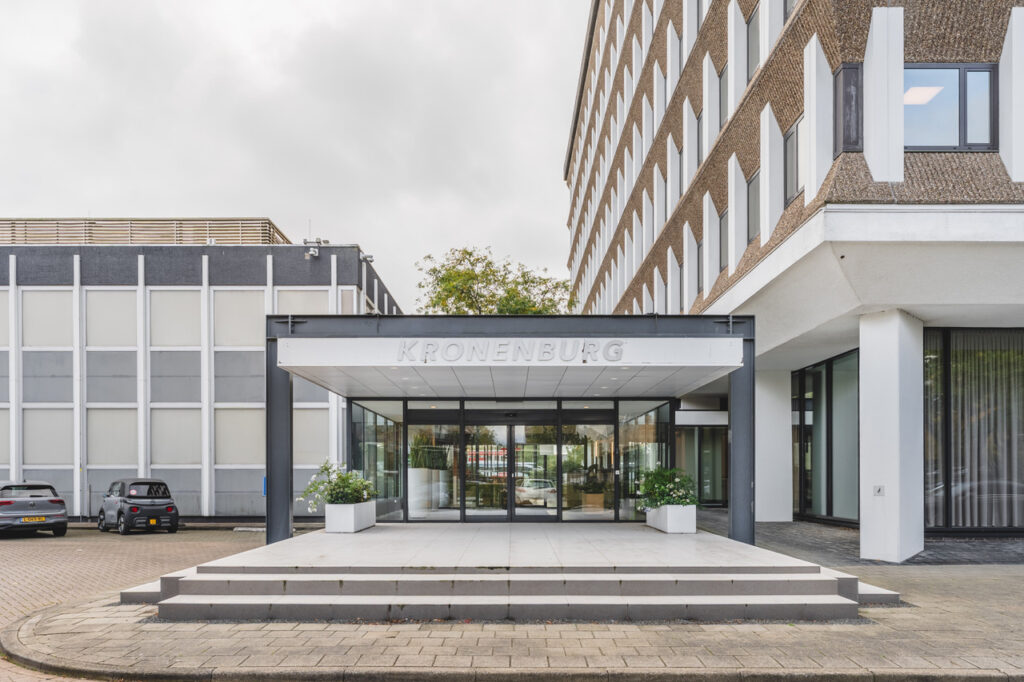
How Kronenburg Offices helps with flexible scaling of your office space
We understand that growing companies need flexibility and security, without hassle or surprises. That’s why we offer turn-key office solutions that grow with your team, from 25 to 85 m², with the possibility to combine units as you grow.
Our approach to flexible scaling:
- Step-up model within the same location – start small and expand without moving
- All-inclusive formula – no extra costs for facilities when you expand
- Short notice periods – 3 months after the first 12 months
- Personal guidance – one point of contact who thinks along with your growth plans
- Immediate availability – additional space is often available within a few weeks
- No hidden costs – transparent prices for expansions
Whether you need an extra unit for new employees or want to grow into a larger space, we think pragmatically about the best solution for your situation. No standard contracts or bureaucracy, just flexible office space that works.
Want to know how we can support your growth question? Read more about our approach or contact us directly for a personal conversation about your possibilities.
Related Articles
- Office space for consultants, project teams, and business service providers
- How do you choose between coworking and renting office space as a small business?
- Which office spaces in Amstelveen are available immediately?
- Which office space in Amstelveen has a short notice period?
- What is a fair price per square meter for office space in 2026?